Showing posts with label Articles. Show all posts

Friday, January 23, 2009

Natural personal care products you can make yourself

Walking into a drug store with about half of the space filled with chemical cosmetics of all kinds, always leaves me feeling frustrated at the insidious disconnect between humans (women in particular) and lack of nature in the products they put on their bodies and even in their bodies. So many "beauty" products are actually dangerous to people, as well as a terrible strain on the environment, not to mention the animals that get tested.

It is a refreshing switch to walk into a health food store to see products there that are none of these things. Nevertheless, mass-produced products require industrial methods to process and produce, and still use up huge amounts of resources (fresh water, energy, producing waste, shipping pollution, etc). So although it feels healthier to choose toiletries that try to support natural connections, I still find that making our own cleaners and beauty products is the most natural and sustainable way to take care of our outer layer.

Which is why I was thrilled to find this website which lists recipes to make your own mouthwash, tooth powder, baby powder, lip balm, moisturizing creams, and deodorants, plus a quick list of alternative to regular store-bought hair products and household cleaners! I've made for myself the spritz deodorant, as well as body powder, using my choice of essential oil scents.

Hope this inspires you to make some of your own toiletries!

Sunday, November 09, 2008

So what IS my dosha, really?

I once read somewhere about a woman who travelled around India, visiting Ayurvedic doctors at every stop, and at each one she received a different assessment of her health and of her dosha. It was eye-opening to see that even in the birthplace of Ayurveda, one may not receive a consistent diagnosis from the experts themselves.

This past week I visited a new Ayurvedic practitioner and received the following assessment: that I am tridoshic. This would technically be the third assessment of my dosha, all of them different! In self-tests done with written and online quizzes, my dosha was Vata-Pitta, with Kapha tendencies. The Ayurvedic doctor I visited a few years ago assessed I was Pitta-Kapha. And this third one puts me at tridoshic (Vata-Pitta-Kapha). Each of the three assessments felt right to me, though I must admit that this latest one seems the most fitting.

There are many factors that determine our dosha, including what time of day it is, what season in the year, and how old we are. Even then, you could have a specific dosha out of balance from eating certain food, or going through something emotionally like stress, or even being pregnant. It is a fluid thing, like life itself, that can't really be pinpointed and established as your "truth" forever. This makes sense to me.

It's a bit more work but I think the lesson here is to always pay attention to oneself and see what's up that's causing what imbalance, whatever our dosha may be. It's cold and wet out? Pacify your Kapha by having warm, drying food like millet or toast. Feeling lethargic? Shake up your Kapha by doing Vata things like being active and eating Vata foods. Skin breaking out, or feeling easily angered? Soothe your Pitta with soft music and a sweet treat. At the same time, knowing what dosha imbalance causes chronic ailments would mean always trying to pacify that dosha, too (like ulcers = pacifying Pitta).

Tuesday, November 04, 2008

Ghee ~ Ayurvedically Healing Clarified Butter


“It is promotive of memory, intelligence, vital fire, semen, vital essence (ojas), kapha, and fat. It is curative of Vata, Pitta, fever and toxins.”Charaka (author of ancient Indian Ayurvedic text, Charaka Samhita).

Ayurveda teaches that ghee is a medicinal food that is excellent for good health when used in cooking or added to foods. It is one of the most ancient and sattvic foods known, healing to all doshas: best for Vatas, soothing for Pittas, and balancing for Kaphas in moderation. For cold, dry, stiff and airy Vata types, ghee adds heaviness and lubrication to the body in the joints and in the digestion. Ghee is cooling and soothing for the fire-based ailments of Pittas, such as fever, acidity, and inflammation. For all three doshas, ghee helps memory and is a healthy fat that is good for the liver and immune system, though Kaphas should consume it in moderation as it also helps build body mass.

(You can read more about ghee by googling “health benefits of ghee”.)

When buying ghee, or any dairy product, look for organic. All toxins like to settle in body fat, and especially mammary glands, which makes it important to choose organic animal products like milk and butter, otherwise they tend to be the most laden with impurities like pesticides, herbicides, antibiotics and other drugs, and toxins found in air, water and feed.

The other day I spoke with someone who cooked magnificent, healing ayurvedic food, and she said she made her own ghee and that it’s really quite simple. I believed her so I thought I’d try it myself, using organic butter of course! Here’s how I make my own ghee in less than half an hour.

HOW TO MAKE GHEE WITH ORGANIC BUTTER

1 block organic, unsalted butter


Place the butter in a heavy-bottomed pot and melt on medium-low heat. Adjust the heat until it begins to bubble nicely, without going too hot. Foam will begin to accumulate quite a bit on the top, and the melted butter will be very opaque. Stir occasionally for 15 minutes until the foam starts to reduce and break up, and the milky butter begins to look like clear, golden oil. When there’s a bit of brown sediment beginning to form at the bottom of the pan, the ghee is ready. Be careful not to burn it during these final minutes of cooking. Remove from the heat and allow to cool slightly.

Meanwhile, sterilize a jar and its lid in a pot of boiling water, then remove and dry with a clean towel. Gently pour the ghee into the jar through a fine metal sieve, with or without cheesecloth lining it -- you only want to get the golden liquid oil and not the sediment at the bottom of the pot. Store closed; no need to refrigerate. Use as you would butter or oil, in soups, cooked vegetables, stir into cooked rice or lentil dishes, or spread on toast and tea biscuits.

Friday, September 05, 2008

My foodlist for before and after labour

I am now officially just 4 weeks away from having my baby! This is a very exciting final month of pregnancy, with discomforts eased by the cooling weather and ceasing work, having time to focus on the new life ahead. One of the things I want to do is indulge in a healing ayurvedic diet for before and after delivery.

My instincts tell me that in this time, I should have fresh, nutritious meals that are either tridoshic or that pacify Vata. My constitution is Pitta-Kapha (and have certainly been feeling it!), but feel that Vata-pacifying foods will be easy to digest, moist, soothing, and full of fibre, all important qualities in preparing for the big challenge to come and for healing my body afterwards.

Did you know that pain is a Vata characteristic? If pain is a part of labour, then soothing my Vata will hopefully prepare my body to feel it less acutely. Also in this last month of pregnancy, my digestion is more sluggish than ever, and Vata foods help stimulate digestion and elimination naturally. And for my recovery after my child's birth, what could be more soothing and healing than soft, comforting, healthful Vata meals!

Here is a list of the foods I'll be preparing:

~ Creamy Kale Soup substituting zucchini or artichoke
~ Dahl Soup with Squash
~ Detox Soup
~ Yoga Mung Beans and Rice
~ Carrot Apple Soup
~ Rice Pilaf
~ Milletto substituting rice or quinoa
~ Coconut Mung Bean Soup (recipe to come!)
~ Warming Kichadi (recipe to come!)
~ Stew of autumn vegetables
~ Rice pudding
~ Stewed fruits

After some weeks of following this diet after delivery, I'll ease into a Kapha-pacifying diet. The weather will be Kapha (cool and wet October/November), and it will help me lose the extra weight I've gained. Hopefully I'll be able to maintain that for some time, as it will also give me energy and warm me up throughout the winter!

Saturday, July 26, 2008

More iron in the diet!

I've discovered recently that, although I'm not anemic, I have slightly below-ideal iron levels in my body. This is likely because, not only am I not a fan of red meat, I'm also pregnant! However, I've discovered through my health care practitioners that there are several meatless ways to increase iron levels in my system!

BENEFITS OF IRON
Iron is what makes red blood cells red (hemoglobin), and carry oxygen throughout the body -- a critical biological function. Several conditions can cause a deficiency of iron, including a lack of iron in the diet, but also excessive bleeding, surgery, infection, and pregnancy. Symptoms can include pale skin, fatigue, weakness, dizziness, shortness of breath, palpitation, headache and backache. For best absorption of iron, consume with something rich in Vitamin C (lemons, orange juice, etc) and avoid combining with caffeine or calcium-rich foods, which counteract the iron.

IRON-RICH FOODS
~ pumpkin seeds (1/2 cup has a full day's worth of iron!)
~ chickpeas and lentils
~ beans (navy, kidney, lima)
~ dried apricots
~ prunes
~ blackstrap molasses
~ beets (whole or juiced)
~ lettuce, spinach, and other dark leafy greens
~ soy (beans, tofu or milk)
~ black sesame seeds
~ honey
also: bananas, black grapes, plums, strawberries, raisins, onions, squash, radish, celery and tomatoes

COOKING WITH CAST IRON
This was an amazing discovery -- cooking with cast iron pots and pans will multiply the iron content in your foods by 3 or 4 times! So if a dish naturally has 50 milligrams of iron, it will jump to upto 200 milligrams by the simple act of cooking in cast iron. I'm thinking it's because the iron in foods draws out iron from the pan and incorporates it into the food -- kind of like a magnet. Though I've also heard that traces of the iron pans simply get passed into the food cooking in it, just like cooking in in copper pots will impart trace copper into foods, and (inversely healthful) teflon will get into your food by cooking on non-stick pans and same with aluminum. Another excellent reason to throw away your aluminum and non-stick cookware and replace them with cast iron!

AYURVEDIC PERSPECTIVE
Blood is Pitta so anemia and iron-related issues are a Pitta condition. Ayurvedically it is recommended to correct iron issues through diet, as listed above, and additionally eating cooked fenugreek leaves. Herbal supplement are also recommended, including Triphala (helps especially as a purgative, easing constipation). Specific yoga postures are also recommended, including shoulder stand, standing head-to-knee forward fold, and corpse pose.

Find more information on iron in the diet and also the ayurvedic guidelines for correcting anemia.

Friday, January 18, 2008

Tips for Being a Healthy Vegan...

...And Vegetarian!

After being vegetarian for 6 or 7 years, I decided to scrap the dairy part altogether and follow a vegan diet. Unfortunately, I did it in a way that caused me to develop food sensitivities. I indeed eliminated all dairy and eggs, but simply increased my intake of breads, potatoes and soy products. So I developed sensitivities to, you guessed it, breads (wheat, oat, yeast), potatoes, and soy products.

I believe there are some simple staples in our diet that will lead to a healthy, balanced vegan body, including:

GO HEAVY ON THE VEGETABLES AND DARK LEAFY GREENS
The most vital foods are dark, leafy greens, to be sure. Add multi-coloured vegetables, root vegetables, and antioxidant-rich berries and fruit, plus hearty whole grains and energy-packed beans and lentils, and you'll do excellently!

EASY ON THE BREADY FOODS
It's too easy to make breads a staple in any diet, but especially a vegan diet (how many times has my dinner been sliced bread with almond butter and bananas!). By not relying on breads, muffins, etc, you'll make room for more whole foods with more complex carbohydrates and nutrients.

WHOLE GRAINS
White rice and pasta may feel like comfort food but these tend to be very refined. Opt for brown rice, non-wheat pasta (kamut, spelt, etc), and take the time to experiment with the many varieties of grains. Try quinoa (very high protein), millet, buckwheat, barley and others, often!

VARIOUS BEANS
Beans are packed with protein, and there's lots available besides chickpeas and tofu. Adzuki beans have the highest protein of all and are easily digested and taste wonderful. Mung beans are delicious, nutritious and versatile... and of course there are all the great lentils! My favourites are French lentils and red lentils, plus chickpeas. I also want to include in this category seeds and nuts, which contain healthy fats and also lots of protein. Try avoiding peanuts, though, as they're are fungal, but go crazy with seeds like pumpkin seeds, sesame (high calcium!), flax and hemp seed (both high in Omegas!).

DON'T RELY ON OR IMMITATION MEAT & DAIRY
If we're used to a diet of cheese and bread and burgers and meat 'n' potatoes, then trying to simply replicate that within the vegan confines will lead to a mono-diet full of soy, fat and gluten. Rather than make a pizza using "ground beef" tofu and soy cheese, skip these and opt for grilled veggies, olives and walnuts on a whole grain homemade crust. Forget macaroni and "cheese", try kamut rotini with fresh pesto and a sprinkle of nutritional yeast.

WHAT'S MISSING?
Anything not already mentioned will of course not fall under the whole foods umbrella of healthy eating. That includes sugar, salt, coffee, tea, booze, oils, margarine -- if you can't clearly see what the plant looks like that this stuff came from, it's been refined and therefore should be really limited in our food repertoire. Also, opt for quick-frying or baking instead of deep-frying foods, and pressure-cooking is the best way to preserve vitamins and flavour in stews and soups. Include lots of fresh (raw) foods, which will have different nutrients than their cooked versions.

A NOTE ON PROTEIN
There's been much debate about whether you need to combine rice and beans for a "complete protein", but my understanding (with much help from my naturopath) is that veg diets tend to be severely deficient in protein. The best source is soy (vary it up with edamame beans, soy powder in baking and smoothies, tofu desserts and baked tofu, instead of immitation meats), followed closely by hemp hearts!

You need 5 grams of protein for every 10 pounds you weigh (ie. 75 g if you weigh 150 lbs). If you're trying to gain or lose weight, calculate based on your target weight. You get 15 grams of protein in: 1 cup of cooked beans, lentils or split peas; 5 Tbsp hemp hearts; 1/2 cup of peanuts;
3/4 cup walnuts or almonds; 1/2 cup soy beans and 1/2 block of tofu.
We need a lot of protein, so get it at every meal and every snack!


Although we may miss our starchy, fatty comfort food, switching to a whole foods vegan diet will simply feel better in our bodies and our spirits. It's an opportunity to embrace the incredible variety of nature's bounty, and to try recipes by cultures from around the world!

Thursday, December 06, 2007

Aluminum elimination

Say that five times fast!

I think it's almost common knowledge by now that aluminum can be dangerous to our health. Abnormal levels of aluminum are found in people suffering from Alzheimer's, osteoporosis, colic, rickets, gastrointestinal problems, anemia, headaches, decreased liver and kidney function, and can contribute to softening of the bones, memory loss, speech problems, interference with the metabolism of calcium, extreme nervousness, and aching muscles.

That's a pretty long list of ailments. The question is, where are we getting all this excess aluminum?

The list of where we get too much aluminum is no shorter. Aluminum is found naturally in our air, water and soil. Acid rain leaches aluminum from the soil into our drinking water, hence the biggest source of aluminum comes from our municipal water supplies. Additionally we find it in household goods. It is used in the process of making cooking pots and pans, utensils and foil. Other items such as over-the-counter pain killers, anti-inflammatory products, and douche preparations can also contain aluminum. Aluminum is also an additive in most baking powders, is used in food processing, and is present in antiperspirants, toothpaste (NB: fluoride is also toxic), dental amalgams, bleached flour, grated cheese, table salt, and beer (especially when the beer is in aluminum cans). (from Bella Online)

To ditch the aluminum from our bodies, we should eliminate the following items from our homes:

ALUMINUM POTS & PANS
Throw out your aluminum cookware and instead use stainless steel or cast iron pots and pans, and ceramic pottery bakeware. Note that the longer food is cooked in aluminum pots, the more they corrode, and the more aluminum is absorbed into the food. Aluminum is more readily dissolved by acid-forming foods including coffee, cheese, meat, black and green tea, cabbage, cucumbers, tomatoes, turnips, spinach and radishes.

ALUMINUM FOIL
Self-explanatory, do not use aluminum foil for cooking or storing food. I've found that sometimes little bits of foil get stuck to the food and may get accidentally eaten. Store foods in stainless steel or glass containers.

ANTACIDS
May contain aluminum hydroxide. Some aluminum-free antacids are available, check labels carefully. Better yet is to eat an alkaline diet and eliminate the need for antacids.

ALUMINUM SALTS
Found in antidiarrheal products and commercial douches.

SHAMPOOS
Anti-dandruff shampoos may contain magnesium aluminum silicate. Watch labels carefully for aluminum lauryl sulfate, which is a common ingredient in many popular shampoo products.

BUFFERED ASPIRIN
Buffered aspirin can contain up to 14.4 to 88 milligrams of aluminum hydroxide or aluminum glycinate. Ordinary aspirin is aluminum free as are many other pain killers. Read the labels carefully.

TETRA PAK JUICE CONTAINERS & ALUMINUM CANS
Aluminum-coated waxed containers, especially ones containing orange and pineapple juices, cause juices inside to absorb aluminum. Beer and soft drinks that are stored in aluminum cans also absorb small quantities of aluminum. Opt for glass bottled beverages or make juices fresh or from concentrate.

ANTIPERSPIRANTS
Contain aluminum chlorhydrate. Switch to natural deodorants. Visit your health food store for options, or try natural concoctions.

BAKED GOODS & CHEESE FOOD ADDITIVES
Cake mixes, frozen doughs, self-rising flour, and sliced process cheese food all contain sodium aluminum phosphate. Baking powder uses sodium aluminum sulfate, but you can make your own natural alum-free baking powder. Starch modifiers and anti-caking agents also contain varying levels of aluminum compounds. Processed cheese and cheese product slices like the kind used on cheese burgers at fast food restaurants contain aluminum to make the cheese melt better.

Eating a diet high in fiber will help push toxins out of the body more efficiently. Eating apples is also supposed to help with aluminum in the body, but I'm not sure how...! Nonetheless, it's no surprise that healthy eating, home-cooking, whole foods and natural cooking materials all contribute to naturally better health.

Read more in the HerbTime website, Black Herbals website, and Wikipedia.

Friday, November 16, 2007

Good salts, bad salts

Our modern diets are overloaded with sodium, hidden in processed and prepared foods, and iodized salt a staple in kitchens. This causes high blood pressure, water retention, dehydration, premature aging, hair loss, and deadens our tasted buds requiring evermore flavoured foods (ie. more salt, sugar, flavour enhancers). But not all salts are created equally, and not all salts are bad for you! In fact, the body needs salt to balance the electolytes in the body. Here are some distinctions:

SODIUM & IODIZED TABLE SALT
~ regular table salt no longer has anything in common with the original crystal salt, because table salt is now the chemical compound sodium chloride as opposed to the natural crystal; it is "chemically cleaned" and reduced only to sodium and chloride, dried in high-temperature kilns that changing he salt's chemical structure, which in turn adversely affects the human body

~ iodine is added to table salt to prevent goiter, but is so plentiful in preserved foods that we don't need to add it in our cooking; magnesium carbonate or sodium silicoaluminate are also an additive to prevent clumping (anything with "alum" should be avoided in the diet as it's been linked to diseases such as Alzheimer's -- this includes aluminum cookware, deodorants, and baking powder)


Table salt (sodium chloride) has only 2 or 3 chemical elements, whereas sea water has 84 elements; for our body to be healthy we need all those elements; in using common salt, we are depriving ourselves of vital trace minerals, contributing to health imbalances and becoming more susceptible to disease. If we think of our bodies having the same salinity as the ocean, and if indeed we all came from that original source of life on Earth, it would make sense to recreate in ourselves the perfect balance of minerals found only in these ancient bodies of water.


SEA SALT
~ sea salt is produced by evaporating sea water as compared to salt produced from mines, but read labels carefully as many of these salts are refined and use some of the same additives as
table salt

~ look for 100% natural (no additives) sea salt, harvested and processed by organic methods, unrefined, and free of pesticides, herbicides, and chemicals

~ fleur de sel means "salt flower" and is a very special sea salt from France, with fine moist granules of a whitish-grey colour; traditionally harvested (mostly by women) by skimming the surface of the sea water of the salt marshes

~ sel gris (grey salt) is organic French sea salt, moist and unrefined and high in minerals. It remains a light grey, almost light purple color because of the clay from the salt flats where it is collected by hand using traditional Celtic methods; considered to be the best quality salt available

~ Himalayan crystal salt comes from one specific location in Pakistan and has been the subject of comprehensive medical research; this special salt can actually be viewed as food and is considered holistic, wholesome, unaltered, natural salt, as it has crystallized in the Earth over millions of years; it contains all the elements (natural minerals and trace elements) found in the human body


TISSUE SALTS
~ tissue Salts are inorganic mineral substances, exactly the same as those that compose our earth and its soils, recognized by 19th century physician Dr. Schuessler as the material basis of the organs and healthy cellular function of the body

~ 12 tissue salts were identified to be present in every human cell (Calc Fluor, Calc Phos, Calc Sulph, Ferr Phos, Kali Mur, Kali Phos, Kali Sulph, Mag Phos, Nat Mur, Nat Phos, Nat Sulph, and Silica)


SALT & AYURVEDA
~ Rasas are the 6 tastes Ayurveda uses to assess foods; they include Sweet, Sour, Bitter, Astringent, Pungent, and Salty

~ the salty taste (lavaana) is heating, moist and heavy, and stimulates digestive fire while providing some grounding -- this makes Salty flavours good for calming Vata, and hence in excess aggravates Kapha and Pitta

~ every meal should contain all 6 tastes to some degree, depending on dosha, so moderately include the salty flavour in your meals (from sea vegetables, Bragg Liquid Aminos, and small amounts of healthy sea salts)


Find more info about Himalayan crystal salt, Ayurvedic tastes, tissue salts, and French natural sea salts.

Thursday, September 06, 2007

Garlic & Onions according to Ayurveda

I've received commentary in the past about the issue with including onions and garlic in my recipes, as they are deemed inappropriate for an Ayurvedic diet. It's such an interesting arm of this life and food philosophy, that I thought I'd talk a bit about it!

In the words of Amadea Morningstar:

~ the first step (for a healthy mind and body via thorough digestion and elimination) is to eat a primarily sattvic (pure, fresh) diet, avoiding rajasic (fiery) and tamasic (spoiled) foods in the main. Sattvic foods are fresh and light and help clear the mind.

Energetically, rajasic foods stimulate more fire, aggression, passion. They are good foods for stirring up trouble or spurring on the dragons within."

In general, to eat foods that are rajasic in nature will take you further away from a clear brain and calm spirit -- in effect, further away from the goal of enlightenment -- and cause your energy to be more emotional, unpredictable and fiery.

Now, you probably want to know what foods are rajasic by now! The list is actually quite long, so I'll include some of the more common foods:

~ garlic
~ canned foods
~ cheese
~ chilis
~ ice cream
~ lemon & lime
~ peanuts
~ pickled or fermented foods & vinegar
~ nightshades (eggplants, tomatoes, peppers)
~ all salts and sugars (all granulated sugars, fructose, syrups, molasses...)


To put things in perspective consider this:

"A bit of these foods can be used in meals with little ill effect and good enhancement of flavor. A couple of cloves of garlic per week, for example, would not be considered overboard at all by most Ayurvedic physicians. Avocados can be an excellent warming and grounding food... If, however, you live on coffee, chilis, ketchup, or sugar, you may want to look again at how you eat. It is possible your "contentious factor" is high."

As well, there are other health benefits to some of these, for example pickles and fermented foods from a Macrobiotic perspective, or the pH-balancing nature of lemons and limes.

SATTVA, RAJAS & TAMAS
These three sisters are properties, found in our minds, in our energy, in our food. They are all necessary elements in life, but like all things, need to be kept in balance.

Sattva is that which makes us curious, thoughtful, and alert. Therefore sattvic foods help us embody these qualities. There seems to be no down-side to having too much sattva in our system!

Sattvic foods include fresh vegetables and fruits, freshly cooked grains and beans, fresh-made yogurt, and nuts, seeds and natural cold-pressed oils.

Rajas makes us active, giving us the desire to work, push, and manifest. In this way, rajasic foods are invigorating and mentally stimulating. An excess of rajas can make a person too competitive, both inwardly and towards others.

Tamas gives us the desire to stop, slow down, and rest. A diet with excess tamasic foods turn us into a couch potato at best, and increase inner darkness, confusion and depression at worst.

Tamasic foods include fast food, fried foods, frozen foods, microwaved foods, process foods, condiments, leftovers, alcohol, drugs, chemicals, onions, mushrooms, margarine, meat, fish and poultry, and anything old, spoiled or rancid.

LIVING IN TAMASIC TIMES
Our modern food culture has got us eating inordinate amounts of rajasic and tamasic foods, like ketchup, burgers, french fries, frozen dinners, nuked and processed foods, with very little fresh ingredients anymore (please, Slow Food Movement, stay alive!). From an Ayurvedic perspective, there is a very obvious parallel between how we are eating, and how we are acting, with our higher than ever levels of violence, crime, war and depression. I believe following these guidelines can make good (sattvic) food our medicine, to help heal not only our bodies, but our civilization as well.

Thursday, August 30, 2007

Vipassana: meditation to see things as they really are

I've heard of vipassana but never understood what it was until I saw two short documentaries on its application in prison systems. Thank goodness for libraries. In my local library they carried two DVDs about vipassana meditation in prisons.

These movies, called "Doing Time, Doing Vipassana" and "Changing From Inside", takes us into a prison in India and one in the U.S.A. and demonstrates the transformation experienced by inmates who went through the intensive 10-day meditation retreat. Both films brought tears to my eyes in seeing the intense inner turmoil in these individuals, and how it gives way in an emotional cleansing that seemed to bring clarity to their minds. Watching these I thought, "miracle". Then I realized what a miracle might be -- a shedding of obstructions in spirit and in heart that reveals the core of life, the essence of existence: love.

I have not taken a vipassana course yet but would love to hear of people's experiences in this. It sounds very deep, intense and uncomfortable, as most worthwhile cleanses tend to be!

Tuesday, July 17, 2007

Setting the record straight by going to see an Ayurvedic physician for a proper diagnosis

Discovering my Ayurvedic mind-body constitution is to me a vital first step to know how to fine-tune my diet and lifestyle in order to optimize my health and be harmonious with the elements that have created me as a person. I have done online test, lengthy questionnaires, everything I would find to help determine my dosha. And yet, all my results -- that I am Vata, no maybe Vata-Pitta -- have been proven wrong!

Today I went to an Ayurvedic physician, trained in India, graduating from a long intensive education, and practicing for many years. She took her time asking me many questions, taking into account that it was a Pitta time of day (midday), Pitta season (summer), and that I am in a Pitta lifestage (30's). She took my pulse and carefully diagnosed my dosha and various physical conditions through this art. In the end, I am definitively, and likely have always been, a Pitta-Kapha. My mind was blown.

The reason for my earlier mix-up is simply that what I saw as a Vata trait (being active) was actually Pitta energy, and Vata's digestion issues in my case were due to Kapha's cold sluggishness. Sometimes a little information is misleading. This reminds me of how I used to try to take care of my health according to my readings but once I went to see a Naturopath, she recommended the opposite of everything I had been doing, and she brought my health back in check.

This post is a reminder to myself that an art and philosophy as beautiful, rich and complex as Ayurveda cannot be understood through self-teaching and reading alone. I think we can certainly follow food and habit guidelines as outlined in multiple sources once we know our dosha, but that essential first step of determining your mind-body constitution is, quite simply put, best left to the professionals. If you have even one Ayurvedic specialist where you live, I certainly urge you to pay a visit, even if you choose not to continue the relationship. Find out your constitution, get your personal list of do's and don'ts, and be on your right path. Of course, if you have some ailments, health complaints or weight issues, by all means open your heart to following this most natural of healing forms with a professional.

Tuesday, July 10, 2007

Why I love CAROB!

I do love chocolate, although I'm finding I'm less and less addicted to it lately. It could be because I've been snacking on naturally sweetened carob chips instead!

Carob is different from chocolate in many ways, and doesn't really taste that much like chocolate, but for people who have adapted their palette to be receptive to the delightful subtle flavours natural foods have to offer, this is one treat easy to fall in love with.

Carob comes from carob tree (locust bean) and is actually a legume that is native to the eastern Mediterranean. Female trees bear numerous, long and flattened, dark brown pods, each of which can contains up to 15 brown seeds embedded in pulp. So far not unlike the cacao tree. The differences include that carob contains no stimulants, caffeine or theobromine, is virtually fat-free, is a source of protein and calcium, and is soothing to the digestive tract. Since it's naturally sweet and not bitter like cocoa, it's easy to use in treats and baking without needing lots of milk, cream or sugar. Also, agriculturally speaking, a carob tree produces upto 1 ton of beans each harvest, where cacaos bear around 1 kg (dried) and require spraying with pesticides and fungicides.

Carob pods are coarsely ground to first remove the seeds and are then roasted and ground to produce carob powder. The seeds can also be processed, being used mainly to produce locust bean gum, which is used as a gelling agent, stabiliser or emulsifier in products such as ice cream.

Here are some yummy-looking carob recipes I've found online for you to try while experimenting with carob powder and carob chips:

Coconut Carob and Almond Pudding
Carob Cupcakes
Various carob recipes on Cooks.com
Carob Nut Clusters
Hazel's Carob Cheesecake
Carob Rice Pudding
Carob Peanut Butter Meringues
Carob Chip Oatmeal Cookies
Carob Balls with nuts and coconut

Do a search of your own and see what great stuff comes up!

Monday, June 25, 2007

How to relax deeply

In meditation during corpse pose today, it occurred to me you might be interested in a few techniques out there for relaxing deeply. This can be done sitting in a chair, cross-legged on the floor, or lying flat on your back. The key is to have the body soft but the spine straight so that you can breathe freely. While in one of these poses, breathe slowly and deeply yet unforced, and remind yourself to:

~ relax your forehead

~ relax your eyeballs

~ relax your teeth

~ relax your jaw

~ relax your tongue


Focusing just on those parts of your head will trigger everything else to relax. I think it's because our eyes and tongue are constantly moving that it feels so calming to set them free!

My first yoga teacher, Kathryn Beet of Yoga Space used to do the trick telling everyone in shivasana (corpse pose) to:

Relax your toes... toes, relax...
Relax your ankles... ankles, relax...
Relax your calves... calves, relax...


...and so on, every so slowly all the way up along the body. Try it next time you find your mind wandering during a reclined meditation. I like to say the first part (relax your toes) on the inhale, and the second part (toes, relax) on the exhale. Give it a try and see how you like it.

Wednesday, March 07, 2007

Acid vs. Alkaline foods

As I described in my recipe post above for Vegetable Tea, eliminating acidic foods, and acid-producing foods, will help heal and prevent a host of illnesses, including candida, arthritis, digestive problems, and cancer. Below I will list foods that are acidic or produce acid, plus alkaline foods, and also healing foods which counteract acidity in the body.

ACID/PRODUCING FOODS (avoid like the plague)
~ all animal protein
(beef, veal, pork, milk, cheese, shellfish)
~ wheat and spelt
~ corn
~ tomatoes
~ oranges, grapefruit, pineapple
~ liquor/alcohol
~ sugar
~ coffee, black tea
~ fried and especially deep-fried foods

SLIGHTLY ACID/PRODUCING FOODS (consume in moderation)
~ lamb, fish, fowl and poultry
~ eggs
~ beans, tofu
~ barley, buckwheat, kamut, oats, rye
~ white rice
~ mushrooms
~ prunes, raisins, tangerines
~ yogurt and butter are neutral foods

ALKALINE FOODS (should become dietary staples)
~ most fruits
(ie. melons, mangoes, papaya, peach, berries...)
~ all vegetables
(ie. spinach, sweet peppers, parsnips, greens...)
~ brown rice, arrowroot, millet, quinoa, almonds
~ high-alkaline vegetables including artichokes, asparagus, broccoli, cabbage, cauliflower, garlic, all dark leafy greens, potatoes, pumpkins, squash...

HEALING FOODS (neutralize acids in the body)
lemons and limes
asparagus
seaweeds
parsley
garlic
ginger


This can be summed up as a few new dietary habits: avoid acid foods, add lemon juice and parsley to your lunch and dinner everyday, eat a wide variety of vegetables, and replace all wheat in your diet with amaranth, millet and quinoa (as whole grains and/or as flour), and switch from white rice to brown rice. Easy!

Monday, February 05, 2007

Winter is Vata Season

Back in the fall, I posted that Autumn is Vata Season, which is true, but so is winter! Cold, dry and windy conditions characterize Vata, hence both seasons being Vata (cold and wet Spring is Kapha, while hot and humid Summer is Pitta).

I am a Vata (but hardly underweight despite this dosha's qualities), and personally I've been spending the last month trying to lose weight, by eating foods with Vata qualities and exercising more, but both these tactics are simply increasing my Vata. My skin is dry, my digestion is terribly unhappy, I'm staying up late, and wearing drab colours, and have been catching colds. So I am realizing that despite my weight-loss efforts, I am going to switch my focus to Vata-pacifying practices to help these issues. It's quite possible that as my digestion remedies itself, maybe the weight-loss will come more easily anyway!

SOOTHING WARMTH
No more coffee, toast and salads, and time to switch to soups, stews, hot tea and stewed fruit! Foods that nourish and balance the body in the cold, dry, winter season are the sweet, sour and salty tastes. It's best to eat less of the astringent, bitter, and pungent tastes in winter, although all six tastes should be present in meals. Warm, home-cooked, soothing foods cooked with easy-to-digest oils such as Ghee or olive oil are ideal, avoiding deep-fried and leftover food, and cold or ice-cold foods which douse the digestive fire.

IMMUNITY
According to Ayurveda, immunity is connected with the digestion. When digestion is strong and appetite is good, then immunity is strengthened, and whatever weakens digestion, weakens immunity. Immunity-boosting foods include fresh, organic, easy to digest, pure and wholesome ingredients including fresh, organic milk and yogurt, vegetables, fruits, whole grains, and ghee (clarified butter). Digestion-enhancing spices (such as ginger, cinnamon, cumin and coriander) should be added too foods while cooking.

PAMPERING ONESELF
Warm baths with oils, moisturizing skin from head to toe, engaging in calming meditation while gazing at the warm light of a candle, and a gentle yoga routine, all soothe the mind and body. Avoid stress, walk away from arguments, don't worry about the small problems which are ultimately insignificant. Draw on the love of Kapha with all things moist, and the fire of Pitta with all things hot and spicy, and the Vata in all of us will feel balanced and supported.

For an excellent article on boosting your immune system during winter, visit this Maharishi Ayurveda page.

Wednesday, November 08, 2006

Autumn is Vata season

Come October, change is in the air. Outdoors the temperature is cool, the air is dry, and the winds pick up -- in other words, it's Vata season! For all doshas, the Vata inside your body will increase because of the condition of the weather outdoors. This is because like increases like in Ayurveda. Until the weather transforms into Kapha in late-winter and early spring, when it is cold and wet outside, everyone will feel better tending to their heightened Vata for these coming months.

As your Vata gets aggravated, you may start feeling stressed or fatigued, experiencing some constipation, dry skin, and lack of sleep. To offset this internal cold and dry restlessness, make sure to establish a steady routine to your days, staying calm, warm and nourished...

ESTABLISH A DAILY ROUTINE
Start by going to bed at the same time every night (preferably around 10pm) and waking at the same hour every morning. Regulate your mealtimes by having lunch at noon, and dinner in the early evening, without skipping breakfast.

CHOOSE FOODS THAT NOURISH
Warm, moist, heavy foods will soothe and heat your Vata. Have fresh and hot stews, soups, dahls and porridge at mealtimes. Do not have leftovers, or dry food like popcorn and raw fruits and vegetables, or light foods like steamed vegetables or crunchy salads. Add a bit of oil or ghee while cooking, with some heating spices like cinnamon or ginger.

SNACKS AND TEAS THAT SOOTHE
Going hours without eating between meals can further aggravate Vata in this season, so prepare some moist rice pudding or stewed fruits for snacking. Do not snack on cold, dry foods like sandwiches or cereal. Sipping warm ginger tea throughout the day will keep you warmed and hydrated. Before bed, have a cup of warm milk (can be rice milk or almond milk) with a pinch of ginger and some honey.

MOISTURIZE YOUR SKIN
Vatas in particular suffer from extra dry skin, so give your body a daily massage with sesame oil or rich cream every night and/or after bathing. Pittas and Kaphas tend to have oily skin so these doshas do well with a light non-greasy moisturizer used daily.

ENGAGE IN LIGHT ACTIVITY
Reconnect with your body and calm your energy with light yoga and stretching. Walking is also excellent exercise but bundle up and wear a hat to cover your Vata-sensitive ears! Daily meditation will also help de-stress. Incorporating these activities into a daily routine will further reinforce a sense of calm and personal nurturing that will soothe Vatas especially, but also all doshas.

WARMTH IN LIGHT AND COLOUR
Colour is another source of balance for doshas. Since Vata is cold, like the colours blue and violet, we do best with warm colours like golden yellow, orange and red. Luckily, autumn is a time of these rich, golden colours as the leaves turn! Try to wear these colours on particularly cold and windy days. Also, when the sun is shining, close your eyes and face the sun as the beams wash your face in warmth and the golden heat penetrates your eyelids. Feel the Pitta of the sun tend to your Vata.

Saturday, September 09, 2006

Pitta, the liver, anger and weight issues

I've been having revelations around my liver lately that I thought I'd share with fellow Pitta types. (I'm actually Pitta-Kapha.)

Despite not having any Kapha in my mind-body constitution, I've long struggled with weight and have a life-long history of dieting. In this past month, however, I've inadvertantly dropped several pounds without changing my lifestyle, save for one addition to my health practice: cleansing my liver. (My naturopath has put me on liver cleansing herbs, and advised several cups of dandelion tea every day plus monthly colonics.)

The liver is a filter that manages fats and toxins coming through the body; metaphysically, it is the seat of anger, and anger is a Pitta manifestation (fire). Anger (even suppressed anger or passive aggressiveness, etc), toxins (drugs, pollutants, etc), bad fats (hydrogenated, saturated, rancid, deep frying, etc), all contribute to overloading this beautiful, hard working organ. In cleansing it of toxins, it can better process fats in the body (hence the weight loss). In dealing with anger, I believe we can also cool the fiery liver to also help it function better.

In all, love your liver. Give it love, treat it well, address anger issues. Pitta is the fire of transformation, a power that we can choose to use for great creations, or for (self-) destruction.

Saturday, September 02, 2006

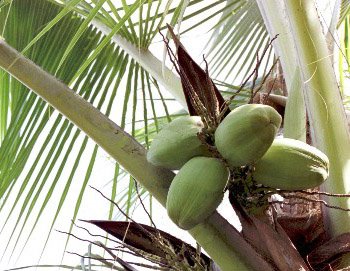
Silky, healthful Coconut Oil!

I only just recently discovered the wonderfulness of coconut oil. Did you know that it is used for hair, skin and cooking? It's healthy for the liver and easily digested. Organic virgin coconut oil makes an excellent butter and margarine substitute for baking and is also great for sauteing. Here are some highlights of the excellence of this health food...

Healthy for your heart
~ Prevents heart disease, high blood pressure, arteriosclerosis and strokes

Helps balance blood sugar and body fat
~ Prevents diabetes and relieves its symptoms and health risks, and promotes loss of excess weight

Anti-viral
~ Kills viruses that cause mononucleosis, influenza, hepatitis C, measles, herpes and HIV

Digestive tonic
~ Relieves symptoms associated with Crohn's disease, ulcerative colitis, and stomach ulcers

Disease preventive
~ Fights free radicals and protects the body from breast and colon cancer, kidney and liver disease, pancreatitis and osteoporosis

* FOR INDIVIDUAL DOSHAS
Coconut oil is the most cooling of all oils. Vatas can consume it for cooking, especially with heating spices. Pittas do very well with coconut oil! And Kaphas should use all oils as sparingly as possible, and also cooked with heating spices.

The best coconut oil to consume is virgin and organic. Here are two websites that sell virgin coconut oil and have lots of health and use info: Tropical Traditions (US) and Peter Paul (Canada).

Wednesday, August 30, 2006

How to save the world in 5 easy steps

Okay, I admit that the title is a bit tongue-in-cheek, but the essence behind it is that it isn't necessarily the superficial acts, like recycling, that will save the world. We need to dig deep within ourselves to find the love, hope and fire that will feed our actions to come from being truly conscious of our place in life.

1 Have love and compassion for yourself

2 Have love and compassion for others

3 Make every choice, action and thought with complete awareness of its motivation, truthfulness and consequence

4 Remember that all aspects of life are connected and benefit from your health, happiness and positivity

5 Perhaps you know what your fifth one is...

Thursday, August 17, 2006

Hemp, beautiful hemp


Hemp is a wonder plant that can be used to make fibers, fuel and food. Nutritionally, in a vegetarian or vegan diet it is a perfectly balanced source of Omega-3-6-9 Essential Fatty Acids with fantastic benefits such as being anti-inflammatory, a nervous restorative and cardiac tonic. The most common source of Omega oils are found in fish liver oil, but hemp is the premier natural source of Omega 3-6-9 Essential Fatty Acids from a plant source.

For millenia, Ayurvedic physicians have used hemp to treat dozens of diseases and medical problems. I am trying to find out which dosha most benefits from hemp (is it cooling, heating, invigorating, soothing?) but so far have seen it interchanged with ghee, which is tri-doshic -- so I conclude that it is healing for all doshas.

Always consume hemp organic and raw (heating destroys the aminos in the fat). It comes in a variety of forms, including hemp seed nuts that you can sprinkle on your food, or hemp butter for spreading on baked goods. There is also hemp seed oil, the most concentrated form, which can be drizzled on a plate of food or used in a salad dressing, and hemp protein powder for shakes. It has a very unique, nutty flavour that can get quite addictive! (...well, not literally, despite its reputation)