“It is promotive of memory, intelligence, vital fire, semen, vital essence (ojas), kapha, and fat. It is curative of Vata, Pitta, fever and toxins.” — Charaka (author of ancient Indian Ayurvedic text, Charaka Samhita).
Ayurveda teaches that ghee is a medicinal food that is excellent for good health when used in cooking or added to foods. It is one of the most ancient and sattvic foods known, healing to all doshas: best for Vatas, soothing for Pittas, and balancing for Kaphas in moderation. For cold, dry, stiff and airy Vata types, ghee adds heaviness and lubrication to the body in the joints and in the digestion. Ghee is cooling and soothing for the fire-based ailments of Pittas, such as fever, acidity, and inflammation. For all three doshas, ghee helps memory and is a healthy fat that is good for the liver and immune system, though Kaphas should consume it in moderation as it also helps build body mass.
(You can read more about ghee by googling “health benefits of ghee”.)
When buying ghee, or any dairy product, look for organic. All toxins like to settle in body fat, and especially mammary glands, which makes it important to choose organic animal products like milk and butter, otherwise they tend to be the most laden with impurities like pesticides, herbicides, antibiotics and other drugs, and toxins found in air, water and feed.
The other day I spoke with someone who cooked magnificent, healing ayurvedic food, and she said she made her own ghee and that it’s really quite simple. I believed her so I thought I’d try it myself, using organic butter of course! Here’s how I make my own ghee in less than half an hour.
HOW TO MAKE GHEE WITH ORGANIC BUTTER
1 block organic, unsalted butter
Place the butter in a heavy-bottomed pot and melt on medium-low heat. Adjust the heat until it begins to bubble nicely, without going too hot. Foam will begin to accumulate quite a bit on the top, and the melted butter will be very opaque. Stir occasionally for 15 minutes until the foam starts to reduce and break up, and the milky butter begins to look like clear, golden oil. When there’s a bit of brown sediment beginning to form at the bottom of the pan, the ghee is ready. Be careful not to burn it during these final minutes of cooking. Remove from the heat and allow to cool slightly.
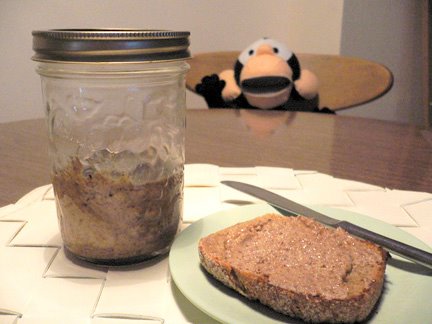
Meanwhile, sterilize a jar and its lid in a pot of boiling water, then remove and dry with a clean towel. Gently pour the ghee into the jar through a fine metal sieve, with or without cheesecloth lining it -- you only want to get the golden liquid oil and not the sediment at the bottom of the pot. Store closed; no need to refrigerate. Use as you would butter or oil, in soups, cooked vegetables, stir into cooked rice or lentil dishes, or spread on toast and tea biscuits.